ME/CFS and Long COVID: New Severity Biomarkers Found

Breakthrough study
Millions of people worldwide suffer from ME/CFS and Long COVID—yet there is still no objective test to confirm the diagnosis or measure how ill a patient is. Now, a new study published in April 2026 in Scientific Reports (part of the Nature Portfolio) may change that.

Our researchers have identified protein patterns in cerebrospinal fluid that are strongly linked to disease severity—offering a potential path toward long-awaited biological markers for these post-infectious conditions.

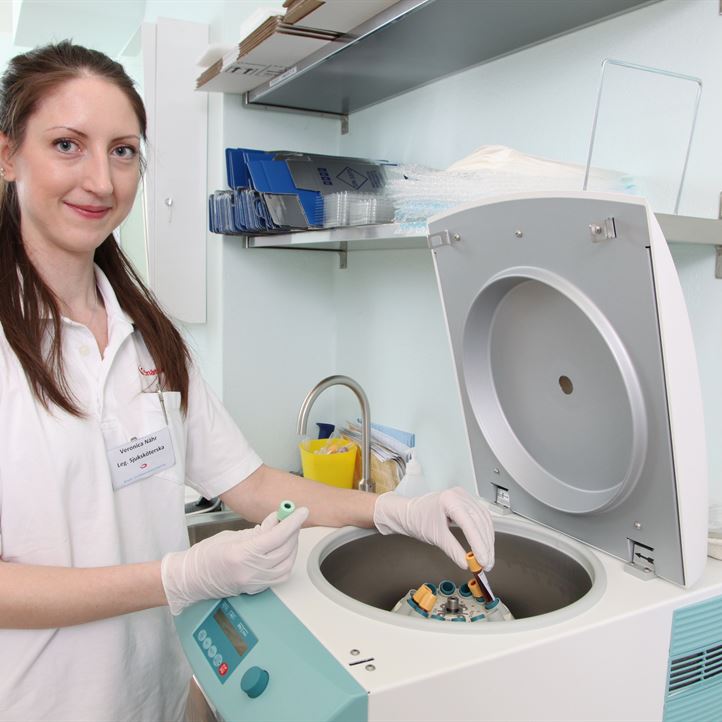
The research team, led by Björn Bragée (Medect/Bragée and Karolinska Institutet) together with Associate Professor Peng Li (Harvard University), analyzed cerebrospinal fluid from 31 ME/CFS patients and mapped a total of 902 proteins. 

The aim was to understand how biological processes differ depending on disease severity. Samples were analyzed by Professor Jonas Bergquist and his team at the Uppsala University.

What did the study find?

The study shows that specific proteins are clearly associated with disease severity.

In patients with POTS (Postural Orthostatic Tachycardia Syndrome)—a condition involving rapid heart rate and dizziness upon standing, commonly seen in ME/CFS—there were signs of immune system activation, including neutrophil activation and platelet reactivity.

In the most severely affected patients, elevated levels of proteins linked to:

  • inflammation
  • coagulation
  • dysregulated growth hormone signaling

were observed.

The researchers also identified four distinct protein ratios that appear to reflect disease severity, related to:

  • cellular stress
  • tissue remodeling
  • interactions between the immune and nervous systems

Why does this matter?

Today, there are no objective biomarkers for post-infectious diseases such as ME/CFS and Long COVID.

This study represents an important step toward changing that.

If validated in larger cohorts, these protein markers could:

  • enable more accurate diagnosis
  • help monitor disease progression
  • support evaluation of treatment effects

Funding

The study was funded by:

  • Open Medicine Foundation
  • ME Research UK

Read the full scientific article here


Medect/Bragée Clinics is a leading Swedish specialist center in pain, neurology, and post-infectious disease. With over 40 years of clinical experience, the organization integrates research, advanced diagnostics, and patient-centered care—aiming to improve outcomes for patients with complex and often overlooked conditions.